
What the Snow Revealed: Hidden Winter Damage in Trees & Shrubs, from the Garden Coach
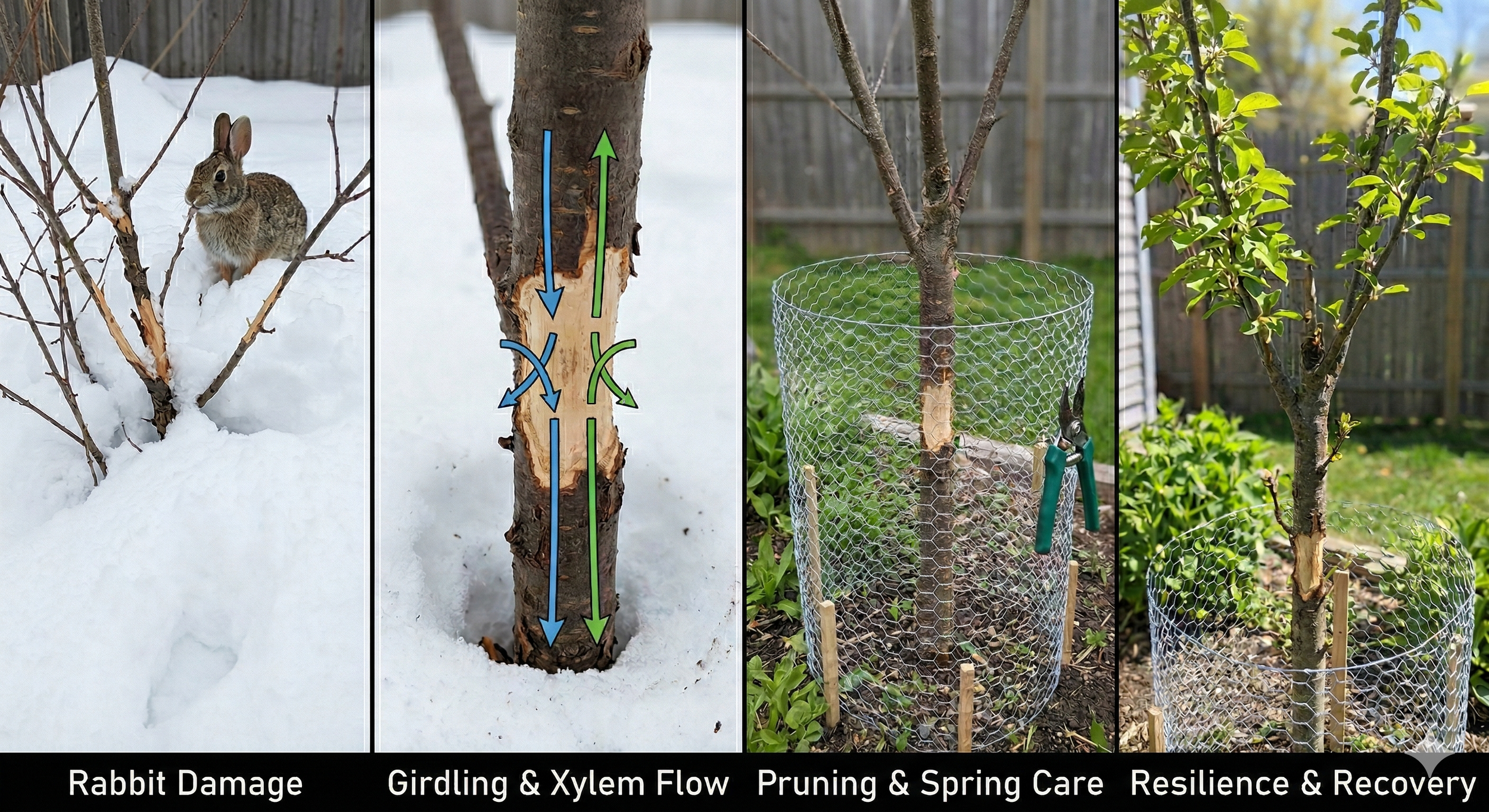
If you’ve stepped into your garden recently and taken a closer look at your shrubs and trees, you may be noticing something unexpected this season. Small trees and shrubs have chewed stems, missing bark, and damage higher up than you’ve expected.
Winter can be one of the most challenging seasons for young trees and shrubs. When snow piles high and food becomes scarce, rabbits and other small animals turn to tender bark for sustenance. And this year, with such deep snow across the Boston area, that impact has been especially noticeable.
As the snow accumulates, it quietly raises the ground level around your plants giving rabbits access to parts of the trunk that are usually well out of reach. Even established protections, like standard 4-foot fencing, can fall short. Plants that typically rest safely above browsing height become vulnerable.
Why this matters?
Beneath that outer bark lies the plant’s lifeline. The inner layers called the xylem and phloem are responsible for moving water, nutrients, and energy throughout the plant. When bark is stripped away, these pathways are disrupted.
If the damage is partial, a plant may recover over time with some care. But when the bark is removed all the way around the trunk, a condition known as girdling, the flow of water and nutrients is effectively cut off. Without that connection, the plant cannot sustain itself.
This is why winter protection matters more than we often realize. A simple wire guard or fence placed in late fall (tall enough to anticipate snow depth which was impossible this year) and set slightly away from the trunk can make a difference.
The Science of the Save: Xylem, Phloem, and Girdling
(Warning: Deep Dive! If you just want the recovery steps, feel free to skip to the next section!)
To understand why a few inches of missing bark can kill a mature shrub, we have to look at the plant’s internal "circulatory system." Just beneath the protective outer bark lies a thin, high-traffic zone that acts as the plant’s lifeline.
The Xylem (Upward Flow): Think of this as the plant's plumbing. These vessels pull water and dissolved minerals from the roots up to the leaves.
The Phloem (Downward Flow): This is the "sugar highway." It carries the energy (carbohydrates) produced in the leaves during photosynthesis down to feed the roots.
When a rabbit "girdles" a tree by chewing a complete circle around the trunk, they aren't just damaging the surface; they are severing the connection. If the phloem is cut all the way around, the roots starve because they can no longer receive food from the leaves. Once the roots fail, the xylem can no longer pump water upward, and the entire plant collapses.
This is why a damaged plant might look perfectly fine and even start to leaf out in April, but later turn brown and die in June. Once the heat hits, it can't keep up with the demand for water.
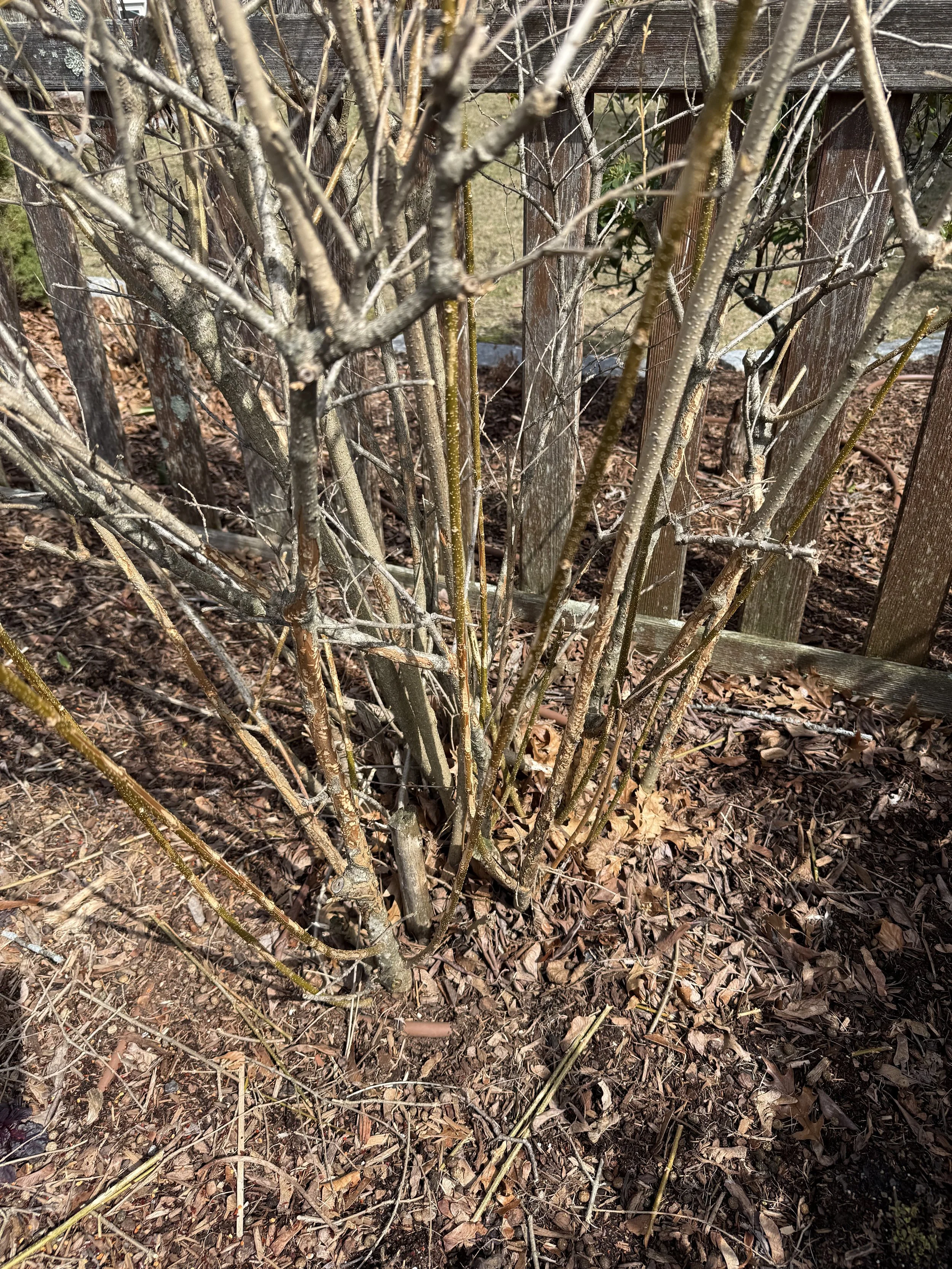
Partial damage along the stems.
Can My Plant Survive?
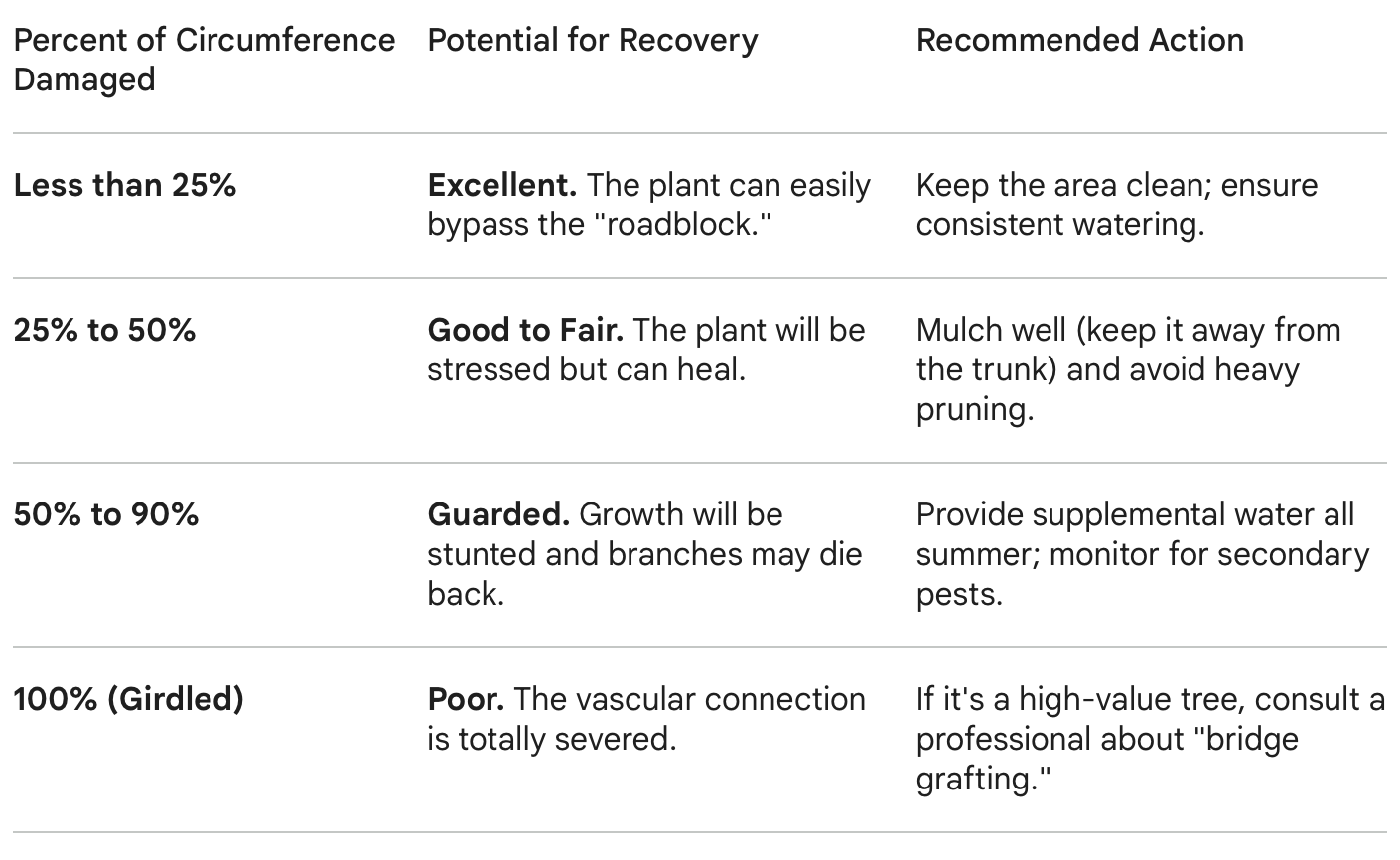
Not all bark damage is a death sentence. Use this guide to assess your garden beds this spring:
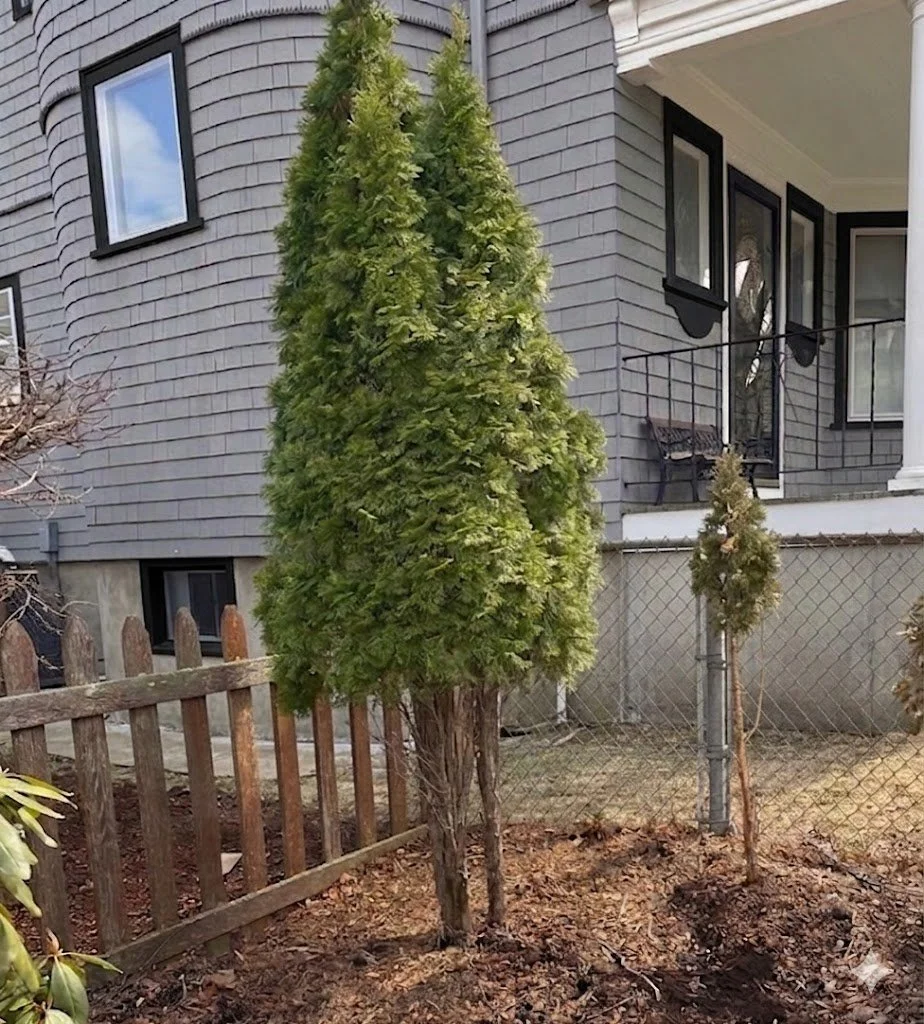
No chance of recovery with the arborvitae on the right.
What can I do now?
As the snow begins to melt, gently assess your garden.
• Assess the “Lifeline” by checking to see if the chewing goes all the way around. Even a narrow strip connection gives hope for recovery.
• Protect any plants that still have viable bark remaining. Use chicken wire or 1/4” hardware cloth, Form a loose cylinder around the trunk. Keep fencing until early summer. If there are many rabbits in the area, consider protection year-round.
• Prune away fully girdled branches with clean pruners so the plant can redirect its energy. Reduce stress by refraining from heavy pruning. The plant needs its energy to heal.
• Watch for signs of recovery including bud breaking, leafing out, new growth,
• Hydrate and Monitor. Damaged bark can’t transport water efficiently. Consisten, deep watering during dry periods is the best medicine.
Damaged plants will benefit from thoughtful care this spring including consistent watering and a balanced slow release organic fertilizer once new growth has begun to encourage healing.
While this winter left its mark, gardens are remarkably resilient. If there is an intact pathway under the bark, there is still potential recovery. With a bit of attention now, many plants will surprise you with their ability to recover and flourish once again.
